

Gender Selection in Thailand: A Guide to Genetic Health and IVF
With the growing interest in assisted reproductive technology (ART), including ICSI/IVF in Thailand, many couples are seeking reliable information about the science behind fertility treatment. Among the subjects that often attract attention are gender selection and the broader discussions around family balancing. These topics raise important questions about medical technology as well as the ethical and legal frameworks that guide reproductive care.
For anyone considering IVF, it is helpful to first understand the basic principles of genetics and how sex is naturally determined at conception. Equally important is knowing that in Thailand, gender selection is only discussed in medical contexts, such as preventing sex-linked genetic disorders. Please note that gender selection for non-medical purposes is prohibited in Thailand. Families are encouraged to consult licensed doctors who can provide appropriate guidance within the local professional and legal standards
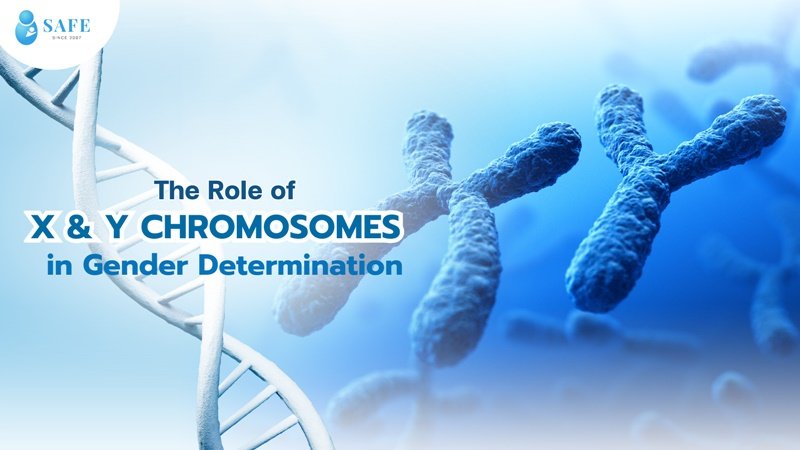
The Role of X & Y Chromosomes in Gender Determination
Chromosomes are tiny thread-like structures inside the nucleus of our cells. They carry DNA, which contains the instructions for how our bodies grow and function. Most people have 23 pairs of chromosomes (46 in total). Among these, 22 pairs are autosomes, responsible for physical traits such as height, eye color, or hair type. The 23rd pair is the sex chromosome, which plays a crucial role in determining whether a baby is male or female.
The mother’s egg always provides an X chromosome, while the father’s sperm may carry either an X or Y chromosome.
- If the sperm contributes an X chromosome, the baby will be XX (female).
- If the sperm contributes a Y chromosome, the baby will be XY (male).
This is why the father’s sperm determines whether the baby is male or female. In the context of IVF in Thailand, understanding the role of X and Y chromosomes in embryos provides essential background. Importantly, gender selection is considered only for medical reasons, such as cases involving an abnormal number of sex chromosomes, and always within professional and legal guidelines.
Medical reasons to consider gender selective ICSI/IVF
Research published by the U.S. National Library of Medicine, which analyzed data from more than 90,000 expectant mothers who underwent chromosomal screening, found that approximately 15% of fetal chromosomal abnormalities were related to sex chromosome aneuploidies (SCA). These conditions occur when an embryo has an abnormal number of sex chromosomes—either missing or carrying an extra copy. While a typical embryo has two sex chromosomes (XX or XY), aneuploidies may involve one being absent or duplicated. Such abnormalities can affect both boys and girls, influencing growth, physical development, and reproductive health.
Turner Syndrome (45, X)
Turner Syndrome occurs when a female is missing one X chromosome, resulting in a total of 45 chromosomes instead of the usual 46. Girls with Turner Syndrome are often shorter than average and may develop distinctive physical features such as a webbed neck or broad chest. Ovarian development is usually incomplete, leading to delayed puberty, infertility, and the absence of menstrual periods.
Additionally, individuals may face congenital heart defects, hearing difficulties, or kidney abnormalities. While intellectual ability is generally normal, the physical health challenges can require lifelong medical attention.
Klinefelter Syndrome (47, XXY)
Klinefelter Syndrome arises when males inherit an extra X chromosome. Boys and men with this condition tend to be taller than average with disproportionately long arms and legs. They may also develop breast tissue (Gynecomastia) and often present with low testosterone, small testes, and infertility. Reduced facial and body hair is also common. Beyond physical symptoms, some individuals may encounter learning difficulties, especially with language or communication, as well as behavioral or emotional challenges. With appropriate medical and psychological support, however, many men with Klinefelter Syndrome live healthy, fulfilling lives.
Triple X Syndrome (47, XXX)
Triple X Syndrome occurs in females who inherit an extra X chromosome. Many affected women are taller than average and may experience mild delays in speech and language development during childhood. Learning difficulties, particularly in reading or mathematics, can also appear, though intelligence generally falls within the normal range. Emotional or behavioral challenges such as anxiety may be more common. Importantly, unlike many other sex chromosome abnormalities, most women with Triple X Syndrome maintain normal fertility and are able to have children without major complications.
XYY Syndrome (47, XYY)
XYY Syndrome is a condition in which a male inherits an additional Y chromosome. Boys with XYY Syndrome are usually taller than average and may face delays in speech development. Some may encounter learning difficulties, particularly with reading and mathematics, though intelligence typically remains within the normal range. Emotional or behavioral concerns may also be observed during childhood. In contrast to many other chromosomal conditions, fertility is usually unaffected, and most men with XYY Syndrome are able to father children naturally.
All of these conditions can be identified through embryo chromosome screening, also known as Preimplantation Genetic Testing for Aneuploidy (PGT-A). This advanced testing allows fertility specialists to detect chromosomal abnormalities before embryo transfer, significantly reducing the risk of passing on sex chromosome aneuploidies and supporting healthier pregnancy outcomes.
What is Embryo Chromosome Screening (PGT-A)?
Preimplantation genetic testing for aneuploidy (PGT-A), otherwise known as embryo chromosome screening, is a diagnostic procedure employed in conjunction with in vitro fertilization (IVF) to analyze the chromosomal composition of embryos. The primary aim is to identify genetic anomalies, including abnormalities involving the sex chromosomes (X and Y).
The significance of this assessment lies in its ability to select embryos that exhibit a normal chromosomal configuration (euploid) prior to implantation, thereby enhancing the prospects of a successful pregnancy and minimizing the risk of miscarriage or genetic abnormalities.
To put simply, PGT-A detects chromosomal abnormalities characterized by the presence of additional or missing chromosomes. Such anomalies can hinder implantation, lead to miscarriage, or result in congenital disorders.
The PGT-A Screening Process
Embryo Biopsy
A limited number of cells (typically ranging from 5 to 7) are delicately extracted from the embryo when it reaches the blastocyst stage (approximately day 5 or 6 of development).
Chromosome Analysis
The extracted cells undergo analysis through techniques such as array comparative genomic hybridization (aCGH), next-generation sequencing (NGS), or fluorescence in situ hybridization (FISH) to detect chromosomal abnormalities.
Selection Process
Only those embryos that are euploid (normal) are selected for transfer to the uterus, while embryos exhibiting chromosomal aberrations are generally discarded.
Assessment of X and Y Chromosomes
PGT-A includes evaluation of the sex chromosomes (X and Y) to determine the sex of the embryo. This aspect is particularly advantageous for couples aiming to prevent the transmission of sex-linked genetic disorders or for those desiring a specific family balance.
As a reminder, gender selection for non-medical purposes is strictly forbidden in Thailand.
We invite you to connect with the specialists at SAFE Fertility Group for consultation on our advanced procedures, along with legal and ethical considerations. Let us assist you on your journey to a healthy and happy family.