

IVF vs. ICSI: Which Treatment Has Higher Success Rates?
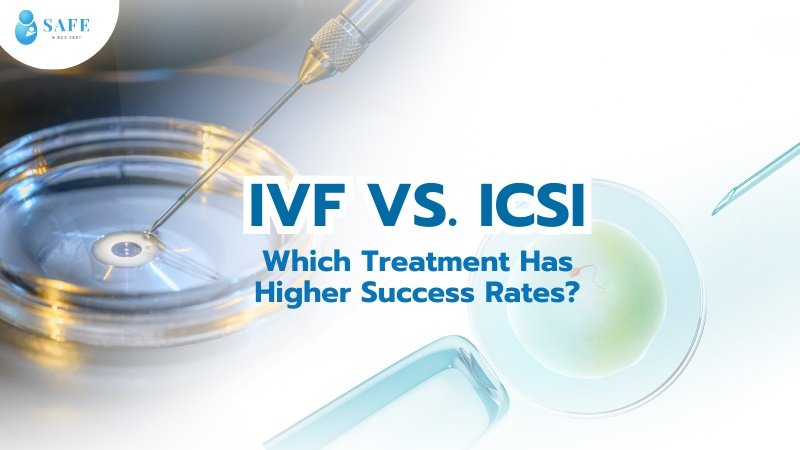
What is the Difference Between IVF and ICSI?
When comparing ICSI vs IVF, these stand out as the two of the most commonly used ART (Assisted Reproductive Technology) procedures to treat infertility
In IVF (In vitro fertilization), doctors fertilize eggs through the use of a culture medium, where sperm find and join with eggs all on their own.
ICSI (Intracytoplasmic Sperm Injection) can be thought of as a more advanced form of IVF. The ICSI process involves an embryologist isolating a single sperm for direct injection into an egg, using a tiny needle known as a micropipette. ICSI is usually reserved to address male infertility, it's therefore recommended for couples where low sperm count, poor sperm motility or morphology make it challenging for sperm to reach and fertilize an egg.
The IVF & ICSI Process: A Step-by-Step Guide
Step 1: Ovarian Stimulation
Fertility medications are used to stimulate the ovaries to produce multiple eggs. This is monitored by ultrasound to track follicle growth (where eggs develop). When the follicles reach a certain size, a trigger injection is given to help the eggs mature and be released.
Step 2: Egg Retrieval Procedure
After the trigger injection, eggs are retrieved through a minor surgical procedure. A needle guided by ultrasound is inserted through the vaginal wall to extract the fluid from the follicles. The collected fluid is examined under a microscope to identify and isolate the eggs.
Step 3: Fertilization and Embryo Culture
This is the point where the fertilization process for IVF and ICSI diverge. The retrieved eggs are combined with sperm in a culture dish. The resulting embryos' cells develop and divide for around 3-6 days before they're ready for fresh embryo transfer. Excess embryos will be frozen and put into storage.
Step 4: Embryo Transfer Process
One or more healthy embryos are selected for transfer into a woman's uterus. This is done using a thin catheter inserted through the cervix. If successful, the embryo will implant in the uterine lining, and pregnancy will occur.
A Look at the Data: IVF and ICSI Success Rates
In general, the success rate for IVF is between 30% to 60%, while the ICSI success rate typically ranges between 50% to 80%. The increased fertility chance for ICSI is naturally higher because sperm is directly injected into an egg while standard IVF relies on a sperm's ability to find and fertilize an egg without hands-on assistance.
The success rates of the two can vary based on individual factors relating to the reproductive health of a couple. Lifestyle choices and other medical conditions may play a part as well, it is advised to consult with a fertility specialist on these subjects, so as to avoid making false assumptions.
SAFE Fertility Group clinic's strong performance across four age segmentations is demonstrated in our publicly available success rates for 'ICSI with PGT (Preimplantation Genetic Testing)'.
At the time this article was written, data collected from 2022 through to early 2025 revealed the following success rates:
The data is not adjusted for patients with varying lengths of infertility, body mass index, ovarian reserve parameters,, embryo grade/survival rates, lifestyle factors and medication regiments.
Women under 29 years old – ICSI with PGT 79.46%
Women 30-34 years old – ICSI with PGT 76.41%
Women 35-39 years old – ICSI with PGT 71.99%
40 years old and above – ICSI with PGT 69.37%
Please also note that these results are only for clinical pregnancies from ET (Frozen Embryo Transfer). FET is a procedure where a frozen embryo is thawed out and transferred into a woman's uterus for implantation.
Key Factors That Influence Success Rates
Important factors that influence the outcomes of IVF and ICSI include a woman's age (as seen in the data), the quality of her eggs, the quality of the sperm (especially for ICSI), and the environment of the uterus.
A Woman's Age
Maternal age is a critical factor affecting IVF/ICSI outcomes, women under the age of 35 generally have higher success rates due to better egg quality. As a woman ages egg quality declines which reduces the chance of fertilization and proper embryo development.
Sperm Production in Men
As mentioned earlier, sperm quality, count, motility, and morphology have a huge impact on success. Severely compromised sperm may still negatively impact fertilization and embryo quality even when ICSI is administered.
Uterine Health
A healthy endometrium, the uterus lining is crucial for implantation. Uterine fibroids (benign muscle tumors) or polyps (overgrown uterine lining tissue) can affect implantation.
Making an Informed Decision for Your IVF Journey
SAFE Fertility Group's IVF Bangkok clinic encourages couples to consult with our fertility specialists for information on how medical history may factor into the successful IVF and ICSI procedures. We are the first clinic in the country to be certified by the Institute of Accreditation of IVF Clinics (RTAC) from Australia and New Zealand. We will assist you in determining IVF or ICSI, which is better for your specific medical history and family goals, ensuring the highest chance of pregnancy.