

How Advanced Sperm Selection Technologies Improve ICSI Success
Male infertility is more common than many people realize. In fact, approximately 40–50% of infertility cases are related to male factors, particularly sperm quality. These issues may include a low sperm count, poor motility, abnormal morphology, or hidden genetic damage within the sperm.
Even sperm that appear “normal” under a standard microscope may still carry underlying problems, such as DNA fragmentation or internal structural defects. These invisible issues can directly affect fertilization, embryo development, and the ability to maintain a healthy pregnancy.
When sperm quality is not sufficient for natural conception, ICSI (Intracytoplasmic Sperm Injection) becomes an essential treatment option. One of the most critical steps in ICSI is the selection of a single sperm to fertilize the egg. If a sperm with hidden damage is selected, the chance of developing a healthy embryo may be reduced. This is why advanced sperm selection technologies play a vital role in improving ICSI outcomes.
What Defines High-Quality Sperm?
Healthy sperm suitable for fertilization should meet three key criteria:
- Morphology: The sperm head should have a smooth, oval shape without large vacuoles. These features reflect proper chromosomal structure and sperm maturity.
- Motility: Sperm should demonstrate progressive motility, meaning they swim forward with strong and purposeful movement rather than rotating in place.
- DNA Integrity: The genetic material inside the sperm should have low DNA fragmentation, ensuring accurate transmission of genetic information to the embryo.
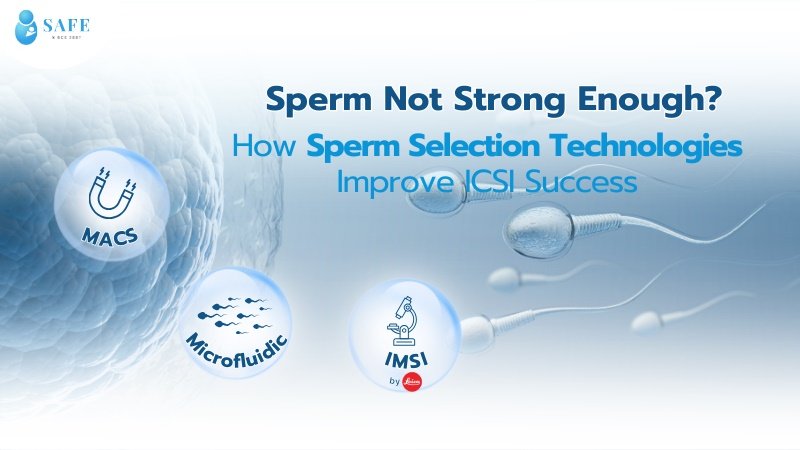
Because each sperm differs at both structural and genetic levels—and standard microscopes cannot detect subtle abnormalities—specialized sperm selection technologies have been developed to identify the healthiest sperm for ICSI. These include IMSI, MACS, and Sperm Microfluidic selection.
1. IMSI by Leica (Intracytoplasmic Morphologically Selected Sperm Injection)
High-magnification sperm selection technology
IMSI uses ultra-high magnification microscopy (approximately 6,000–8,000x) to allow embryologists to examine sperm morphology in extreme detail. This level of magnification makes it possible to detect tiny defects, including vacuoles or internal structural abnormalities within the sperm head—factors closely linked to DNA quality.
At SAFE Fertility Clinic, IMSI is performed using high-precision Leica microscopes, known for exceptional clarity and resolution. This allows embryologists to identify abnormalities that cannot be seen under conventional magnification.
Who may benefit from IMSI?
- Men with a high rate of abnormal sperm morphology (teratozoospermia)
- Couples with repeated ICSI failure
- Couples with a history of recurrent miscarriage or poor blastocyst development
2. MACS Sperm (Magnetic Activated Cell Sorting)
Magnetic-based sperm selection for DNA integrity
MACS is a sperm selection technique that combines biochemical markers with magnetic separation. It helps remove sperm that are undergoing apoptosis or have high DNA fragmentation, even when their appearance and movement seem normal.
Damaged sperm bind to magnetic particles and are separated, allowing embryologists to retain sperm with better DNA integrity for fertilization.
Who may benefit from MACS Sperm?
- Men with high DNA Fragmentation Index (DFI), typically above 30%
- Couples who have experienced failed IVF/ICSI cycles
- Couples with a history of miscarriage after embryo transfer
3. Microfluidic Sperm Sorting (MSS)
A gentle, near-natural sperm selection method
Microfluidic Sperm Sorting technology mimics the natural selection process of the female reproductive tract. Using micro-scale channels, only sperm with strong motility and normal morphology can swim through the device to reach the collection chamber.
This method does not require centrifugation, helping to reduce oxidative stress and preserve sperm DNA integrity.
Who may benefit from Microfluidic Sperm Sorting selection?
- Men concerned about sperm damage from centrifugation
- Men with high DNA fragmentation
- Couples with previous IVF/ICSI failure or poor embryo quality
Which Sperm Selection Technology Is Right for You?
IMSI, MACS Sperm, and Microfluidic Sperm Sorting selection each serve different purposes in ICSI treatment. The most appropriate approach depends on multiple factors, including:
- Standard semen analysis (count, motility, morphology)
- DNA fragmentation testing
- Previous treatment outcomes
- Lifestyle and individual health factors
A personalized evaluation allows doctors and embryologists to choose the most suitable sperm selection strategy for each patient.
When Sperm Quality Is a Challenge, Hope Still Remains
At SAFE Fertility Clinic, sperm quality is carefully assessed at every stage—from evaluation to selection and ICSI fertilization. By combining advanced sperm selection technologies with international laboratory standards, we aim to support healthy embryo development and help couples move forward with confidence on their fertility journey.