

How PM 2.5 Pollution Damaging Sperm and Eggs Without You Knowing
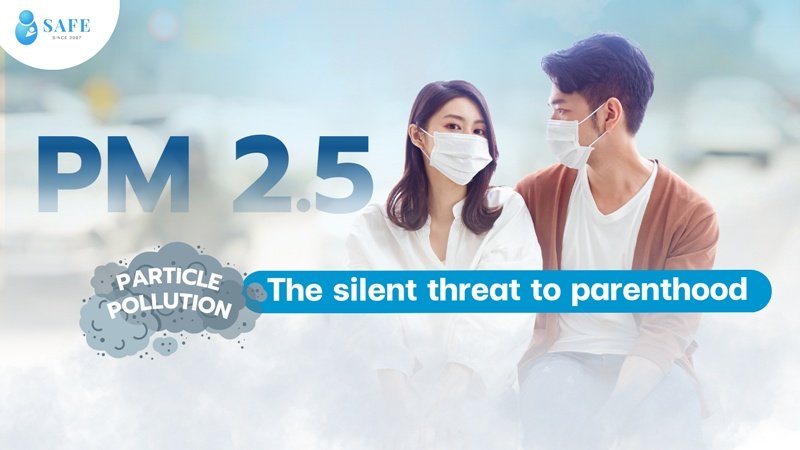
Checking the air quality index (AQI) has become a grim morning ritual for city dwellers. While we are all familiar with how PM 2.5 (Particulate Matter 2.5) affects our lungs and hearts, a more insidious danger is lurking. Recent studies show that these microscopic particles are a "silent threat" to our reproductive systems, often causing damage before we even realize it.
For couples planning to conceive or struggling with infertility, PM 2.5 is an environmental factor that cannot be ignored. These particles are small enough to enter the bloodstream, infiltrate reproductive cells, and directly compromise the quality of both eggs and sperm—potentially becoming the "missing link" in unsuccessful pregnancy attempts.
Why is PM 2.5 more dangerous than it looks?
At less than 2.5 microns in diameter—several times thinner than a human hair—these particles bypass our body’s natural filtration systems. Once inhaled, they travel deep into the lungs and cross directly into the bloodstream.
The real danger, however, lies in what these particles "carry." Toxic heavy metals like lead, cadmium, and mercury hitch a ride on PM 2.5, triggering Oxidative Stress once inside the body. This leads to systemic inflammation, DNA damage, and hormonal imbalances—particularly in the highly sensitive reproductive system.
How PM 2.5 Attacks Male Fertility (Sperm Quality)
Spermatogenesis is a delicate 70-day cycle. Exposure to PM 2.5 during this window can impair male fertility in several ways:
- Lower Sperm Concentration: Long-term exposure is linked to a significant drop in sperm count.
- Reduced Motility: PM 2.5 can damage the sperm’s energy source, making them "too tired" to swim toward the egg.
- Abnormal Morphology: Pollutants disrupt cell division, resulting in misshapen sperm that struggle to penetrate the egg.
- DNA Fragmentation: Oxidative stress can cause the DNA within the sperm head to "break," a leading cause of early-term miscarriage or stunted embryo development.
How PM 2.5 Impacts Female Fertility (Egg & Ovarian Health)
The impact on women is equally concerning, as toxic particles infiltrate the follicular fluid without any warning signs:
- Depleted Ovarian Reserve: Prolonged exposure is linked to a faster decline in AMH (Anti-Mullerian Hormone) levels, potentially leading to early menopause.
- Compromised Egg Quality: Toxic fluid surrounding the eggs creates a "hostile environment," making successful fertilization difficult and increasing the risk of chromosomal abnormalities in embryos.
- Hormonal Disruption: These particles act as Endocrine Disruptors, throwing estrogen and progesterone out of balance, which leads to irregular cycles and ovulation issues.
6 Ways to Protect Your Fertility from PM 2.5
Monitor the AQI: Avoid outdoor activities when pollution peaks. If you must go out, always wear an N95 mask.
- Invest in HEPA Filtration: Use air purifiers with HEPA filters in both your bedroom and workspace to minimize inhalation.
- Load up on Antioxidants: Eat a colorful diet rich in Vitamin C, E, and Beta-carotene to combat oxidative stress at the cellular level.
- Targeted Supplementation: Under medical supervision, consider supplements like Coenzyme Q10, Astaxanthin, or NAC to help repair cells from free radical damage.
- Stay Hydrated: Drinking plenty of water helps your body’s natural detoxification processes run smoothly.
- Get a Fertility Check-up: Don’t wait. A Sperm Analysis and AMH test can provide a clear picture of your reproductive health and help you plan accordingly.
PM 2.5 is more than just a respiratory issue; it is a hurdle on your journey to parenthood. Awareness and prevention are just as vital as any other part of your health regimen.
Planning a family in a high-pollution environment? SAFE Fertility Clinic offers comprehensive fertility screenings, including advanced egg and sperm quality assessments. Let our international-standard technology help you overcome the invisible obstacles to a healthy pregnancy.
Article by: Nattharut Kulphaweesuwan, M.D. (Dr.Kong)
SAFE Fertility Group PCL, Gaysorn Amarin Branch
Medical License Number 37453

Reference:
- โรงพยาบาลจุฬาลงกรณ์ สภากาชาดไทย : ดูแลสุขภาพหญิงตั้งครรภ์ในภาวะ PM2.5
- https://kcmh.chulalongkornhospital.go.th/line/%E0%B8%94%E0%B8%B9%E0%B9%81%E0%B8%A5%E0%B8%AA%E0%B8%B8%E0%B8%82%E0%B8%A0%E0%B8%B2%E0%B8%9E%E0%B8%AB%E0%B8%8D%E0%B8%B4%E0%B8%87%E0%B8%95%E0%B8%B1%E0%B9%89%E0%B8%87%E0%B8%84%E0%B8%A3%E0%B8%A3%E0%B8%A0/
- National Library of Medicine. Air Pollution and Quality of Sperm: A Meta-Analysis. https://pmc.ncbi.nlm.nih.gov/articles/PMC4443398/
- ESHRE (European Society of Human Reproduction and Embryology). Factsheet on air pollution and reproductive health. https://www.eshre.eu/-/media/sitecore-files/Factsheets/FACT-SHEET-Climate-change-2024_03_04.pdf
- Harvard T.H. Chan School of Public Health. Fine particulate air pollution may play a role in adverse birth outcomes. https://www.sciencedaily.com/releases/2024/11/241129142916.html
- World Health Organization (WHO). Air quality and Health. https://www.who.int/news-room/fact-sheets/detail/ambient-(outdoor)-air-quality-and-health
- MDPI journals. Effects of Cadmium, Lead, and Mercury on the Structure and Function of Reproductive Organs. https://www.mdpi.com/2305-6304/8/4/94