

Marriage Equality and Medical Options for LGBTQ+ Family Building: 2026 Update

Looking back at the past, the romantic journeys of the LGBTQ+ community in Thailand have faced numerous limitations, particularly regarding legal rights and family building. Many couples had to hide their dreams of having children or face obstacles when trying to mutually consent to medical treatments. However, January 23, 2025, marked a beautiful historical milestone when the Marriage Equality Act fully came into effect. The definition of "family" was thereby broadened and proudly recognized.
Nevertheless, it is well understood that when it comes to LGBTQ+ family building, marriage is only the first step. For many couples, the ultimate goal is to have children. Even with a more open social context, physiological realities and certain medical laws continue to present unique challenges for each couple. Today, however, medical science has advanced significantly and stands ready as a bridge of hope, assisting couples who have entered into equal marriage in having children as they desire. This article by SAFE Fertility Group will guide you through the latest legal updates and medical options designed to care for couples of all forms with dignity and safety.
- Marriage Equality and Medical Options for LGBTQ+ Family Building: 2026 Update
- 2025 - 2026 Legal Landscape Update: Marriage Equality and the ART Law
- Recommendations from SAFE Fertility Group During This Transition
- For Female Couples: From International Models to Preparation in Thailand
- For Male Couples: Preparation for the Future (Social freezing)
- Why Waiting for Legal Clarity is the Best Way to Protect Your Family?
- Recommended Roadmap for LGBTQ+ Family Building
- Technology & Trust: Because Your Dream Requires Reliable Expertise
- Conclusion
- References
2025 - 2026 Legal Landscape Update: Marriage Equality and the ART Law

To ensure your family planning proceeds correctly and confidently, here is an update on the relevant legal progress:
- Marriage Equality (Effective since January 23, 2025) It is a joyous occasion that the Marriage Equality Act is now officially in effect. This grants LGBTQ+ couples full fundamental legal rights, such as the right to manage inheritance, the right to consent to medical treatments, and the right to jointly adopt children.
- 2026 Update: What is the Status of the Assisted Reproductive Technology (ART) Law? Despite the existence of the Marriage Equality Act, the use of medical technology for family building (such as surrogacy for male couples or Reciprocal IVF for female couples) is governed by another law: the Protection of Children Born through Assisted Reproductive Technologies Act, B.E. 2558 (2015).
The latest update in 2026 is as follows:
- Currently Under Amendment: The Department of Health Service Support (HSS), Ministry of Public Health, is intensively pushing for amendments to this draft law to align with marriage equality.
- Key Changes: The new draft will change the terms "husband and wife" to "spouses." This means that if this law passes, legally married same-sex couples will have the right to access surrogacy and medical technologies legally. (Considerations are also underway to unlock access for foreigners under specified conditions).
- The Reality Today: However, as of 2026, this amended draft law "has not yet been officially promulgated." It remains in the parliamentary consideration process.
Recommendations from SAFE Fertility Group During This Transition

Because medical laws are still awaiting their final unlocking, all standard fertility clinics in Thailand are currently unable to provide surrogacy or Reciprocal IVF services to same-sex couples.
This is why SAFE's approach emphasizes a "Social freezing" strategy. What we recommend couples can do immediately, safely, and legally includes:
- Undergo a Fertility Health Assessment to evaluate the readiness of the uterus, ovaries, and sperm quality.
- Carrier Screening to check for the risk of genetic diseases, especially if there is a family history.
- Social Freezing (Egg / Sperm Freezing), which preserves eggs and sperm during their healthiest and most robust reproductive years.
In summary: In 2026, we are nearing the finish line. The subordinate laws are closely following the primary law. Banking reproductive cells today buys time and preserves high quality cells. Once Parliament promulgates the amended ART law, all couples will be ready to immediately enter the embryo creation process without worrying about declining cell quality due to advancing age.
For Female Couples: From International Models to Preparation in Thailand

When studying family-building models for female spouses in countries with fully open laws (such as Spain, the UK, or the USA), a very popular and beautiful medical option emerges: the Reciprocal IVF (ROPA Method).
This process deeply intertwines the love of two people. One partner acts as the "Genetic Mother" providing the egg, which is fertilized with donor sperm. Once a healthy embryo is developed, the doctor transfers it into the uterus of the other partner, who acts as the "Gestational Mother." This creates a profound bond with the child for both mothers—one through genetics and the other through pregnancy.
However, in the current Thai context: Despite the Marriage Equality Act, the practical details for performing ROPA still require clarity from the subordinate law (the amended ART Act of Thailand) regarding its directions, conditions, or limitations.
Is using a Sperm Donor illegal in Thailand? Receiving sperm donation in Thailand is "not illegal," provided it falls under the condition that it "must be an altruistic donation without any expectation of return, and commercial trading is strictly prohibited." Donors must undergo rigorous health, infectious disease, and genetic screening according to Thai Medical Council standards.
Nevertheless, the current limitation for LGBTQ+ couples is that under the existing law, the right to utilize donor sperm from a Sperm Bank or a donor is restricted solely to "legally married husband and wife (male-female)." Therefore, during this period while the subordinate law is not yet enacted, the appropriate preparation is undergoing a health assessment and Egg Freezing to preserve egg quality, awaiting the day the law grants legal access to donor sperm.
For Male Couples: Preparation for the Future (Social freezing)

Regarding family building for male couples, the current legal context still prohibits commercial surrogacy. A positive and concrete solution that can be initiated today for Social freezing involves the preparation of both yourselves and family members:
- Semen Analysis: Age, stress, and lifestyle all impact sperm quality. Undergoing an assessment for sperm count, morphology, and motility is the first step in understanding your reproductive health status.
- Sperm Freezing: Preserving reproductive cells in advance should be considered when a specialist evaluates it as appropriate or medically indicated. This ensures that the preserved cells are healthy and ready for use when legal and other environmental factors permit.
- Preparation with a Blood Relative (Surrogate): The law mandates that a surrogate must be a "blood relative" of one of the partners. Therefore, educating and preparing a relative is crucial. A relative wishing to act as a surrogate must strictly meet the legally defined qualifications:
- Relationship: Must be a blood relative (e.g., sister, cousin) but must not be an ascendant or descendant (parent or child).
- Pregnancy History: Must have previously been pregnant and given birth at least once.
- Marital Status: If the relative has a legally registered husband, the husband must also sign a consent form.
- Genetic Connection: The use of the surrogate's own eggs is strictly prohibited (eggs from a different donor must be used to separate the genetic bond).
- Medical Assessment: Must pass a comprehensive physical and psychological readiness evaluation by a doctor.
- Inviting a relative who is likely to assist in the future for an initial fertility health check-up with a doctor helps determine feasibility and allows for safe and prudent planning of the next steps.
Why Waiting for Legal Clarity is the Best Way to Protect Your Family?

While awaiting the promulgation of the subordinate law, it is understandable that out of a strong desire to have children, many families might be offered "shortcuts" or services outside legal boundaries (such as illegal commercial surrogacy or undisclosed procedures). However, from medical and legal perspectives, these shortcuts often carry risks that can have long-term impacts:
- Risks to Parental Rights: If the process is not legally sound from the beginning, you may face significant challenges in legally recognizing the child upon birth, potentially resulting in a lack of full legal rights over the child. This is a risk not worth taking for any parent.
- Safety Standards: Procedures not properly regulated by the Medical Council may place gametes, embryos, or the pregnant individual at uncontrollable medical risks.
The Value of Waiting: The amended law is currently under consideration. Choosing the Social freezing method by undergoing health checks and banking reproductive cells with a standardized clinic is an option that comprehensively protects both "health" and "family rights" for when that day arrives.
Recommended Roadmap for LGBTQ+ Family Building
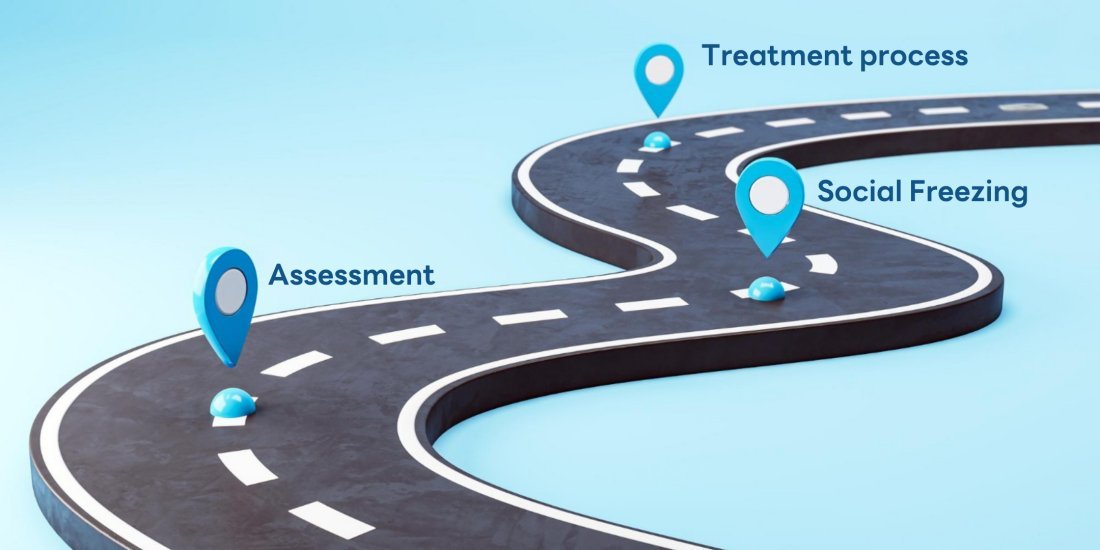
To make the journey towards your goal clearer, here is a 3-phase approach that can be started immediately:
- Phase 1: Assessment Consult a specialist. Check the health of the uterus, ovaries, and sperm quality, and undergo Carrier Screening to evaluate your baseline health.
- Phase 2: Social freezing Consider Egg Freezing or Sperm Freezing to pause the biological clock for your reproductive cells while they are in optimal condition, preventing age-related decline.
- Phase 3: Action (Entering Treatment) Once the subordinate law is enforced and officially recognizes "spouses," the prepared gametes will be ready to immediately enter the embryo creation process—whether through IVF, Reciprocal IVF, or surrogacy—without losing any time.
Technology & Trust: Because Your Dream Requires Reliable Expertise

At SAFE Fertility Clinic, we deeply understand that each couple's path to building a family is unique, carrying its own story and sensitivities. Treatment is not merely about utilizing technology; it is about applying Personalization to create an appropriately tailored treatment plan.
- World-Class Expertise: Our team of experienced reproductive medicine specialists, alongside an Embryology Lab certified to international standards, ensures that every cell is cared for in an optimal and safe environment.
- Dedicated Personal Assistant: We recognize that consulting about fertility can bring about anxieties or many questions. Therefore, we provide Personal Assistants who are well-trained in diversity to care for, advise, and coordinate every step with friendliness, respect, and the utmost privacy.
Conclusion
No matter what form your love takes, planning for LGBTQ+ family building can start today by seeking accurate information and preparing your body. Modern medicine is a tool that helps protect the integrity of reproductive cells and prepares you to build a future for your family when everything aligns perfectly.
If you are looking for a companion ready to listen and steadily plan your family building together, you can schedule an appointment to speak with and be evaluated by our team of specialists today.
"We believe the hope of having a child should be nurtured with understanding, science, and respect for each individual's body. SAFE meticulously designs every process to bring you closer to that hope, in the most appropriate way possible."
Treatment outcomes and medical procedures depend on individual physical conditions and specific factors. Please seek consultation and evaluation from a medical specialist.
References
- Act Amending the Civil and Commercial Code (No. 24), B.E. 2567 (2024) [Marriage Equality Law]. (2024, September 24). Royal Thai Government Gazette. Vol. 141, Part 59 Kor, pp. 1-14.
- Protection of Children Born through Assisted Reproductive Technologies Act, B.E. 2558 (2015). (2015, May 1). Royal Thai Government Gazette. Vol. 132, Part 36 Kor, pp. 52-66.
- Department of Health Service Support, Ministry of Public Health. (2024). Directions for Amending the Protection of Children Born through Assisted Reproductive Technologies Act, B.E. 2558 to Accommodate Gender Diversity.
- The Medical Council of Thailand. (2022). Medical Council Notification No. 35/2565 Re: Standard Requirements for the Provision of Medical Assisted Reproductive Technology Services.
- American Society for Reproductive Medicine (ASRM). (2021). Access to fertility services by transgender and nonbinary persons: an Ethics Committee opinion. Fertility and Sterility.