

Low AMH Levels: Does It Mean No Chance of Pregnancy, or Are There Still Options?
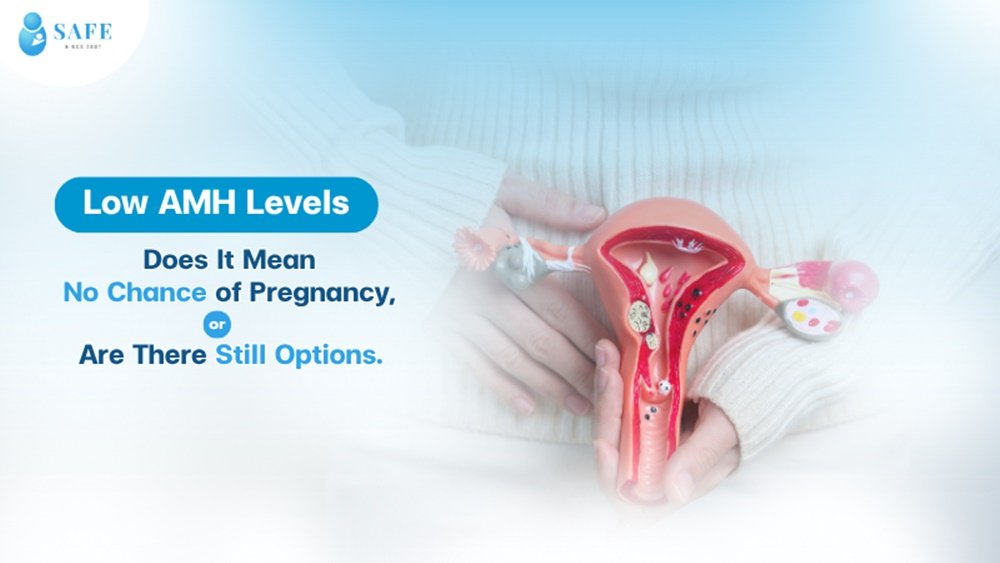
For many women who wish to have children, the first step in preparation is a fertility health check. One of the most important tests is the AMH test (Anti-Müllerian Hormone test), which measures AMH in females to indicate ovarian reserve—the number of eggs remaining in the ovaries.
When results show a low AMH level, it’s natural to feel anxious or assume pregnancy is impossible. But the truth is: a low AMH does not mean you can never have children. AMH reflects egg quantity, not egg quality. Fertility also depends on other factors such as age, ovulation, uterine health, and the use of assisted reproductive technology (ART).
What Is AMH and Why Is It Important?
AMH (Anti-Müllerian Hormone) is produced by ovarian follicles during a woman’s reproductive years. It plays an important role as an indicator of ovarian reserve and helps doctors evaluate how the ovaries may respond to fertility treatments such as egg freezing or IVF/ICSI.
- Normal AMH levels (1.0–3.5 ng/mL): Suggest healthy ovarian reserve, good potential for natural conception, and responsiveness to fertility treatments.
- High AMH levels (>3.5 ng/mL): May indicate polycystic ovary syndrome (PCOS), which can cause irregular ovulation.
- Low AMH levels (<1.0 ng/mL): Suggest declining egg count, often related to age or diminished ovarian reserve.
- Very low AMH (<0.5 ng/mL): Indicates severely reduced egg count—women should consult a fertility specialist promptly.
Whether AMH is high or low, results should always be interpreted with guidance from a fertility specialist for the most accurate treatment planning.
Low AMH in Females: Can You Still Get Pregnant?
A low AMH level alone does not mean the door to pregnancy is closed. Fertility depends on multiple factors:
- Age: Younger women with low AMH often have a better chance of pregnancy compared with older women at the same AMH level because egg quality tends to be better.
- Egg and uterine quality: Regular ovulation and a receptive uterine lining still make pregnancy possible.
- Lifestyle habits: Balanced nutrition, enough sleep, exercise, and stress management support ovarian and uterine health.
- Medical technology: Assisted reproductive technologies such as IVF/ICSI can significantly increase the chance of pregnancy.
Think of AMH as a “signal” to pay closer attention to your fertility health—not a final verdict on your chances of becoming a parent.
Options for Women with Low AMH
Even with a low AMH result, there are still proactive steps and medical options available:
- Egg Freezing: For women not ready to conceive yet, egg freezing helps preserve fertility potential. Freezing eggs at a younger age can maintain quality, even if AMH is already low.
- ICSI (Intracytoplasmic Sperm Injection): A suitable option for couples wanting children sooner, as it directly injects sperm into the egg and allows selection of higher-quality embryos.
- Lifestyle adjustments: Nutrition rich in protein and antioxidants, avoiding smoking and alcohol, and regular exercise can support reproductive health.
- Earlier family planning: If AMH is low, doctors may recommend planning pregnancy sooner to take advantage of the eggs that remain.
- Specialist consultation: A fertility doctor can provide tailored advice and design treatment based on individual health conditions.
For women who discover low AMH levels, it does not mean pregnancy is impossible. Instead, it’s an early signal to take fertility health seriously and plan ahead.
At SAFE Fertility Clinic, our team of specialists, advanced reproductive technology, and internationally accredited laboratories are here to help transform concern into Confidence—supporting your journey toward parenthood.
Article by: Peangpailin Voradithi, M.D. (Dr.Tangmo)
SAFE Fertility Group PCL, Gaysorn Amarin Branch
Medical License Number 46855

Reference
- Anti-Mullerian hormone (AMH) test information on Australian and New Zealand fertility clinic websites: a content analysis
https://pmc.ncbi.nlm.nih.gov/articles/PMC8264877/ - Anti-Müllerian Hormone (AMH) Testing
https://www.uhcw.nhs.uk/clientfiles/files/IVF/CRM%20AMH%20Patient%20Information%20%28GEN-PI-000213V11%29.pdf