

Understanding the Endometrial Lining: The Key to Successful Embryo Implantation
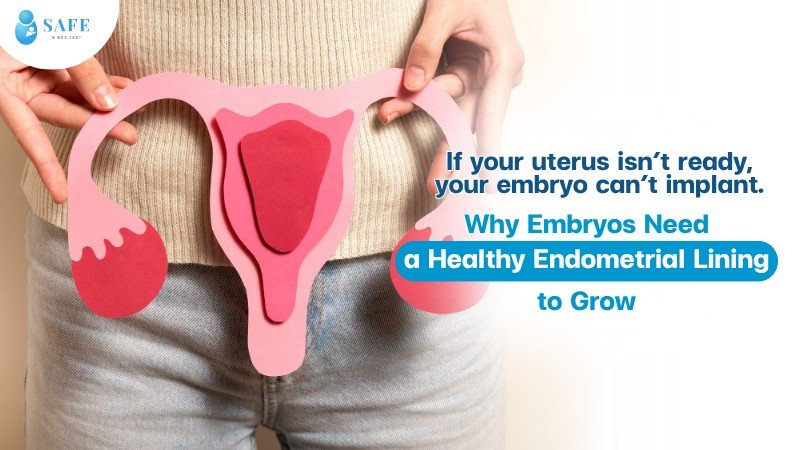
When preparing for pregnancy—especially through IVF/ICSI—many often focus primarily on egg and sperm quality. However, the "endometrial lining" is another crucial factor that should not be overlooked. It is a vital component for embryo implantation. If the endometrial lining is not ready, even good quality embryos may experience a reduced implantation rate, leading to a missed opportunity for pregnancy in that cycle.
For anyone planning embryo transfer in Bangkok, understanding the role and health of the endometrial lining is a vital step toward optimizing implantation success.
The Endometrial Lining's Crucial Role in Pregnancy?
The endometrium is the tissue lining the inside of the uterus. It undergoes changes throughout the menstrual cycle under the control of estrogen and progesterone hormones, playing a very important role in pregnancy
In the context of ICSI/IVF, after fertilization occurs in the lab, the embryo is transferred to the uterus during a controlled procedure. Once inside the uterus, it must attach itself to the thickened, receptive endometrial lining. If the lining is too thin, inflamed, or poorly developed, the embryo may not implant—even if it is high-quality.
- Primary site for embryo implantation After the egg and sperm fertilize in the fallopian tube, the embryo travels into the uterus, where the thickened endometrial lining is ready to receive it for implantation.
- Source of nutrition for early embryos A healthy endometrial lining has abundant blood vessels and nutrients essential for the embryo's initial growth before the placenta fully develops later in pregnancy.
- Determines the success rate of pregnancy If the endometrial lining is too thin, too thick, uneven, or inflamed, the chances of the embryo implanting and growing into a successful pregnancy are significantly reduced.
What Does a Healthy Endometrium Look Like?
- Appropriate thickness During the "Implantation Window" which is the period of endometrial receptivity, typically occurring in the post-ovulatory phase or after receiving progesterone hormones, the endometrial lining should be 8-12 millimeters thick. This level optimally supports embryo implantation. If it's too thin or too thick, it can affect embryo implantation and reduce the chances of pregnancy.
- Triple-Line Pattern When examined by ultrasound around the time of ovulation, the endometrial lining should show a triple-line pattern, indicating its health and readiness for embryo implantation.
- Absence of other pathologies The endometrial lining should be free of foreign bodies such as endometrial polyps, intrauterine adhesions, submucosal fibroids, or chronic endometritis, which can directly obstruct implantation and significantly affect the endometrium's ability to receive the embryo.
Factors Affecting Endometrial Lining Quality and Condition
- Several health issues can impact the quality and condition of the endometrial lining
- Thin Endometrium: This is a common problem that makes embryo implantation difficult and can be caused by:
- Certain medications: Such as estrogen-lowering drugs or medications affecting the endometrial lining's response.
- Frequent or aggressive D&C procedures: These can damage the endometrial lining.
- Excessive uterine contractions (Hypercontractility): This can lead to insufficient blood flow to the endometrial lining.
- Poor blood circulation: Such as certain conditions that restrict blood flow to the uterus.
- Chronic inflammation: This can thin the endometrial lining.
- Abnormally Thick Endometrium (Endometrial Hyperplasia/Polyp)
- Endometrial Hyperplasia: Often caused by excessive estrogen stimulation without balanced progesterone, which may involve abnormal cells.
- Endometrial Polyp: These are growths from the endometrial lining that can obstruct embryo implantation.
- Intrauterine Adhesions (Asherman's Syndrome) Often caused by endometrial injury from repeated D&C procedures or uterine surgery. These adhesions can narrow the uterine cavity and obstruct embryo implantation.
- Adenomyosis A condition where endometrial cells grow into the uterine muscle layer, leading to an enlarged uterus, severe menstrual pain, and potential impact on embryo implantation and pregnancy.
- Chronic Endometritis This is chronic bacterial infection in the uterine cavity, often without clear symptoms, but it is a cause of recurrent miscarriage and failed embryo implantation.
Diagnosis, Treatment, and Preparation of the Endometrial Lining for Pregnancy
After undergoing the IVF/ICSI process and culturing healthy blastocyst-stage embryos, preparing the endometrial lining for embryo implantation is another crucial factor that should not be overlooked before the embryo transfer procedure. Accurate diagnosis and proper care under the guidance of a specialist doctor can significantly increase the chances of pregnancy. Detailed diagnostic and care guidelines for the endometrial lining include:
- Medical history and physical examination Including detailed questions about menstrual cycles, lower abdominal pain, history of pelvic surgery, or miscarriage to identify potential issues related to the uterine cavity.
- Transvaginal Ultrasound The primary method for assessing endometrial lining thickness and characteristics, as well as detecting abnormalities such as polyps, fibroids, or structural uterine anomalies.
- Hysteroscopy Involves inserting a small camera into the uterine cavity to examine abnormalities and simultaneously perform treatment, such as removing polyps, adhesions, or taking tissue biopsies for pathological examination.
- Endometrial Biopsy/ERA Test In cases of recurrent failed embryo implantation, doctors may recommend taking an endometrial tissue sample to check for chronic endometritis or to determine the optimal time for embryo transfer (Endometrial Receptivity Analysis - ERA Test), a technology that helps increase the chances of pregnancy on a personalized basis.
How to prepare the endometrial lining for embryo implantation
- Hormone therapy: Such as estrogen and progesterone hormones, to help the endometrial lining thicken and prepare for embryo implantation.
- Treatment of pathologies: Such as hysteroscopic surgery to remove obstructing polyps, adhesions, or fibroids.
- Treatment of chronic inflammation: Using antibiotics as prescribed by a doctor.
- Increasing blood flow to the uterus: Such as exercise, acupuncture, or certain medications that improve blood circulation (under medical supervision)
Embryo Transfer in Bangkok: A Personalized, Science-Backed Approach
For international patients seeking ICSI/IVF in Thailand, understanding the role of the uterus in implantation is essential. At SAFE Fertility Clinic is here to guide you with world-class expertise and compassionate care in multilingual—every step of the way. Our approach to embryo transfer in Bangkok combines:
- Advanced ultrasound and uterine diagnostics
- RTAC-certified medical protocols
- In-house genetic testing and embryologist
- A patient-first, fully personalized treatment plan
If you are planning to undergo ICSI/IVF or frozen embryo transfer in Thailand, we encourage you to consult with our fertility specialists regarding endometrial preparation. Ensuring that your uterus is receptive at the time of transfer is among the most important factors in achieving a successful pregnancy.
Article by: Peangpailin Voradithi, M.D. (Dr.Tangmo)
SAFE Fertility Group PCL, Gaysorn Amarin Branch
Medical License Number 46855

Reference
- How to Optimize Your Uterine Lining Before IVF. https://www.alifehealth.com/blog/how-to-optimize-your-uterine-lining.
- All About the Endometrial Lining. https://www.verywellhealth.com/endometrial-lining-5207134.
- The effect of endometrial thickness and pattern measured by ultrasonography on pregnancy outcomes during IVF-ET cycles. https://pmc.ncbi.nlm.nih.gov/articles/PMC3551825.
- เยื่อบุโพรงมดลูกหนาตัวผิดปกติ (Endometrial hyperplasia). https://w1.med.cmu.ac.th/obgyn/lecturestopics/topic-review/4514/.