

How the Time-lapse Incubator Supports Embryo Selection and Boosts Implantation Success
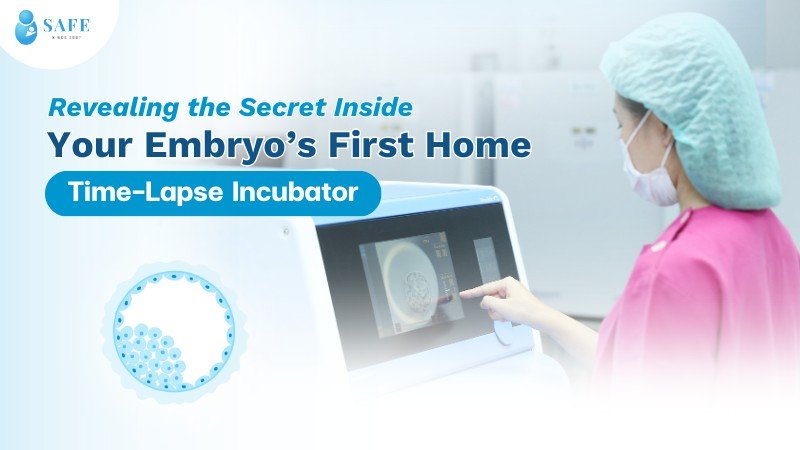
Embryo quality is one of the key factors determining the success of IVF and ICSI treatment. Creating an appropriate environment for embryo culture from the very beginning plays a critical role in supporting embryo development. Even when other treatment steps are carefully performed, implantation may still not occur if the embryo lacks sufficient strength or developmental potential.
This is why technologies that closely monitor embryo development have become an important part of fertility treatment. The Time-lapse Incubator not only supports embryo culture under optimal conditions, but also provides valuable developmental data that assists doctors and embryologists in selecting embryos with higher implantation potential. Because high-quality embryos are the foundation of successful pregnancy outcomes.
Time-lapse Incubator: A Closed Culture System That Simulates Natural Conditions in a “Stable and Undisturbed” Environment
The success of IVF and ICSI treatment begins in the embryology laboratory, where embryos must be cultured in an environment that supports proper and uninterrupted development. The Time-lapse Incubator is a closed embryo culture system designed to closely replicate the natural conditions inside the mother’s body, while reducing key risks associated with benchtop incubator systems.
Key parameters include:
1. A Precisely Controlled Environment
The closed system continuously maintains optimal culture conditions, including temperature, humidity, and essential gas levels such as carbon dioxide (CO₂) and oxygen (O₂). These parameters remain stable every minute, 24 hours a day, throughout the entire culture period.
2. Avoiding Disturbance During Embryo Development
In benchtop incubation systems, embryos must be periodically removed from the incubator for microscopic evaluation. This process exposes embryos to fluctuations in temperature and gas concentrations, which may cause cellular stress and affect development.
In contrast, the Time-lapse Incubator is equipped with an internal camera that automatically captures images at regular intervals. Embryos remain inside the incubator at all times and are not moved or exposed to external environmental changes.
Culturing embryos in this “quiet” and undisturbed environment is a key factor that allows embryos to express their full developmental potential. By minimizing environmental stress, the Time-lapse Incubator supports stable embryo growth and helps reduce factors that may negatively affect implantation.
24-Hour Time-lapse Monitoring: Supporting Embryo Selection with Continuous Developmental Data
What makes the Time-lapse Incubator different is its ability to monitor embryo development continuously. Embryos change constantly as they divide and grow, and the system records each important step in this process.
Embryos that divide at the right pace are more likely to have better implantation potential than those that divide too quickly or too slowly. The information collected by the Time-lapse Incubator helps doctors and embryologists select embryos based on clear and consistent developmental patterns.
Key observations include:
- Cell Division Timing:
The system records when embryos divide from one cell to two cells, two cells to four cells, and so on. These timings are compared with known developmental patterns to help identify embryos with better implantation potential.
- Detection of Abnormal Development:
The Time-lapse Incubator can also detect unusual events such as uneven cell division, cells with more than one nucleus, or excessive fragmentation. These signs may indicate that the embryo is developing abnormally.
By observing embryo development from fertilization until the blastocyst stage, doctors and embryologists gain a clearer understanding of which embryos are more suitable for transfer. Clinical studies have shown that using Time-lapse monitoring may help improve implantation rates compared with benchtop incubation methods.
Who Is the Time-lapse Incubator Suitable For?
Although Time-lapse technology can be beneficial for all patients undergoing IVF or ICSI by supporting embryo selection and implantation potential, doctors often recommend it particularly for the following groups:
1. Couples with a History of Repeated Implantation Failure
In cases where embryos from previous cycles failed to implant or stopped developing in the laboratory without a clear explanation, the Time-lapse Incubator allows embryologists to observe subtle abnormalities in cell division that may not be detected through conventional assessment.
2. Patients with a Limited Number of Eggs or Embryos
When only one or two embryos are available, minimizing stress during culture becomes especially important. The Time-lapse Incubator helps reduce embryo stress by eliminating the need to remove embryos for observation, while maintaining stable temperature and gas conditions throughout development.
3. Patients Who Require Careful Embryo Ranking and Selection
In cases where multiple embryos are available, the Time-lapse Incubator uses analytical models to assess developmental timing and patterns. These data are compared with large reference databases and used to support embryo ranking based on implantation potential.
4. Patients Concerned About Chromosomal Abnormalities
Although Time-lapse monitoring cannot replace chromosomal testing such as PGT-A, it may provide early warning signs. Embryos that show abnormal division timing or unusually slow or rapid development are more frequently associated with chromosomal abnormalities.
5. Intended Parents Who Wish to Observe Embryo Development
The technology allows patients to view a video sequence showing embryo development from the first cell division through the blastocyst stage. This offers emotional value and helps patients better understand the early developmental journey of their future child.
6. Patients Who Previously Did Not Achieve Blastocyst-stage Embryos Using Benchtop Incubators
In addition to providing a more stable culture environment, the Time-lapse Incubator allows embryologists to better understand embryo behavior throughout development. The collected data also helps doctors explain outcomes more clearly to patients and supports treatment planning for future cycles.
At SAFE Fertility Clinic, we understand that every step matters in your ICSI/IVF journey. That’s why we’ve adopted the Time-lapse incubator, a global-standard technology that provides embryos with an optimal, stable, and nurturing environment.
Our doctors and embryologists use the in-depth data from the system to carefully select embryos with the highest potential — giving every couple a greater chance to achieve their dream of parenthood.
Reference
- Embryo selection: The role of time-lapse monitoring https://www.researchgate.net/publication/269714827_Embryo_selection_The_role_of_time-lapse_monitoring
- The effect of embryo selection using time-lapse monitoring on IVF/ICSI outcomes: A systematic review and meta-analysis https://pubmed.ncbi.nlm.nih.gov/37778750/