

PGDIS 2026 Research Highlights How PGTseq-A Increases Pregnancy Success from Previously Overlooked Embryos
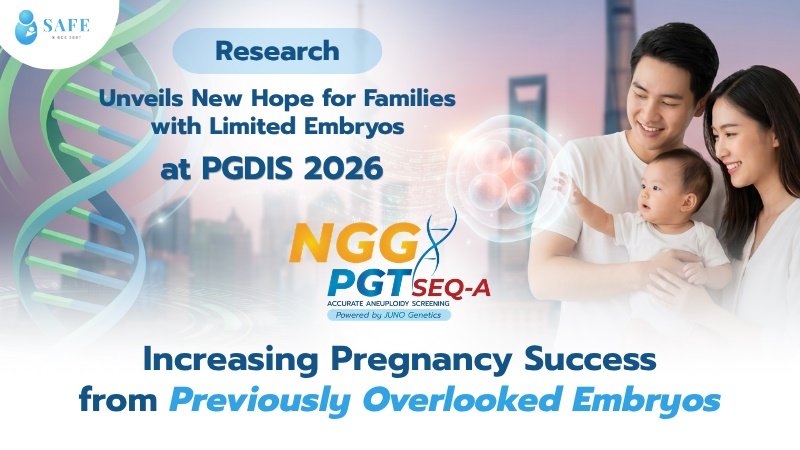
Embryologists from SAFE Fertility Clinic and Next Generation Genomic Co., Ltd. highlighted Thailand's growing expertise in reproductive medicine at the 23rd International Conference on Preimplantation Genetics (PGDIS) in Shanghai. The team presented research findings aimed at increasing pregnancy success rates for patients undergoing IVF/ICSI through PGTseq-A, a precision embryo screening technology that offers high-resolution chromosomal analysis.
A New Horizon in Embryo Selection: Beyond Physical Morphology
In IVF/ICSI procedures, embryologists typically evaluate embryo viability based on fertilization patterns or physical morphology. Embryos exhibiting atypical patterns—known as Atypical PN (such as those with 1 nucleus or 3 nuclei instead of the standard 2 nuclei)—are often classified as high-risk for chromosomal abnormalities and are traditionally excluded from transfer.
However, the latest research from SAFE Fertility Clinic’s embryology team utilized PGTseq-A (tNGS combined with SNP Profiling) to demonstrate that these atypical embryos can, in fact, be chromosomally normal (euploid) and possess the potential to develop into healthy pregnancies.
Why PGTseq-A? Technology Beyond Standard Embryo Chromosomal Testing
The comparative study revealed that PGTseq-A offers significant advantages over other PGT-A (WGA-based) methods:
- Superior Precision: Enhanced capability to analyze chromosomal sets within the embryo, significantly reducing diagnostic errors regarding embryo viability.
- Unlocking New Opportunities: Empowers embryologists to identify euploid embryos within atypical groups, providing a vital alternative for couples with a limited number of embryos.
- Demonstrated Clinical Outcomes: The research documented successful pregnancies from atypical embryos, including a twin gestation and healthy singleton pregnancies derived from both 1PN (1 nucleus) and 3PN (3 nuclei) embryo groups.
This international recognition reflects the dedication and expertise of the research committee and executive leadership, led by Wiwat Quangkananurug, M.D., Founder and CEO of SAFE Fertility Group PCL., and Sujin Chanchamroen, Chief Laboratory Officer of SAFE Fertility Group PCL., along with the distinguished team of scientists:
- Patthorn Jaikla
- Wanwisa Suksalak
- Nuntiporn Nunthanasup
- Wipawee Tangsee
- Chutimon Pomsuwan
- Nadsarin Tochoowong
- Manipa Tuntipoj
- Navarat Siriprasertchok
The selection of the PGTseq-A research for presentation at the 23rd PGDIS conference reaffirms SAFE Fertility Clinic’s commitment to continuous advancements in reproductive technology, ensuring the highest standards of care and delivering success to every family who trusts in our expertise.